

Sam Goldstein heads south
In March 1933 Sam Goldstein, trying to figure out how to support his family after his previous business was closed by the banks, decided to cash in an insurance policy worth $800, purchase an old Nash vehicle and head south from Nebraska to Hutchinson Kansas hoping to start a new business. Around 5 miles north of Manhattan Kansas the car broke down near a ranch. The owner helped Sam and his partner get to Manhattan and sold them a few bags of wool for their new business. They found a place they could rent for $5 a month and that was where Kansas Hide and Wool began.
Sam and his partner rented rooms at The Baltimore Hotel for $5 per week. Within 10 years, Sam would own that building.

Jack joins Sam
By the end of May, Sam realized he needed help, but could only afford someone that would work for room and board. He sent word back to Nebraska that he needed Jack, his only son, to come to Manhattan.

Marvin Robinson
In July 1934, Marvin Robinson, Jack’s cousin, hitchhiked to Manhattan to join Sam and Jack at Kansas Hide and Wool. He started work on August 1 with a pay of room and board.
By 1945 Marvin was a co-owner of the company and over his 60 years became one of the most beloved members of the company and is still talked about today.

Jack leaves to serve his country
As Manhattan Hide and Wool continued to grow and move along, Jack received a draft notice in December of 1941. Because the business needed him to get through the peak season, Jack requested to be deferred until January 31 of 1942 offering to voluntarily enlist if his request was granted. By February 3rd he was at Fort Leavenworth reporting for duty and was sworn in. Jack would not return for 3 years while Sam and Marvin ran Kansas Hide and Wool.
Jack was assigned to the US Army Air Forces, the 8th Air Force, 68th Bomb Squadron, 44th Bomb Group, 2nd Air Division as an Air Operations Specialist (or as Jack called it ‘amateur navigator’). By October of 1942 Jack was already making bombing runs over the English Channel.
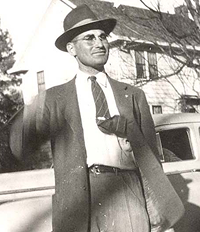
Jack returns, minus the fanfare
Following the Japanese surrender Jack received a discharge on September 25, 1945. Eager to get back to his family Jack decided to not wait on the bus and hitchhiked from Fort Leavenworth back to Manhattan. Jack often told the story about arriving at the office around 2 in the afternoon where his dad looked up and said ‘Good, you’re back. Get to work.’

Mr. Kelly comes to town
In November of 1945 Jack had gone to Ellis, Kansas to pick up some hides. By chance a young man name Jim Kelley was at the rendering plant looking for work. The plant told him they didn’t have any openings. While he was there Jack pulled into the plant in a Manhattan Hide and Wool truck. Mr. Kelley was hired to load the truck up and after loading the truck up Mr. Kelley asked Jack for a job. Jack told him if he came to Manhattan he’d give him a job.
Mr. Kelley borrowed $1 from 5 different people and was able to buy the $3.78 bus ticket to get to Manhattan. December 1, 1945, a week after talking to Jack, Mr. Kelley arrived in Manhattan with less than a dollar left to his name. By noon he was working for Jack at $.50 per hour. Mr. Kelley was quickly sent out with Sam to go buy hides, furs, metals and really anything they could find that had value. It was a long day and Mr. Kelley got back after 9 that night, still with no money. Jack had come to the office to pick up Sam and asked Mr. Kelley if he had any money. When finding out that he didn’t, Jack took him to a local hotel and rented him a room and then gave him some money to get by until payday.
Little did Jack know he had just hired someone who would go on to work for his company for 65 years and have a tremendous impact on the company, the people and the culture that carries on today.

Tragedy Strikes
In May of 1954 tragedy struck. Sam was on a buying trip riding as the passenger in the company truck when a car in front of them suddenly applied their brakes. The truck went into a skid, went off the road, hit an embankment and overturned. The driver came away with minor injuries, but Sam was left paralyzed from the neck down.
On July 14, 7 weeks after the accident, Sam Goldstein, founder of Kansas Hide and Wool succumbed to his injuries.
The future of Manhattan Hide and Wool was now solely on the shoulders of his 37 year old son Jack, and Jack had a new direction on his mind.

Changing Directions
Even though they had been predominantly a Hide and Wool company, Jack and Sam had also often bought and sold scrap metals. Jack had never been fond of the hide and wool business and knew that it wasn’t the future he wanted. After Sam passed and Jack, as Jack put it, went from chief laborer to chief, Jack started charting the course for steel to become the core business.
In late 1954 he purchased a chunk of land near Kansas Hide and Wool and set to putting up an 8000 square foot warehouse to support the steel business.

Steel and Pipe Supply Co, Inc
Despite the fact that Manhattan Hide and Wool hadn’t been listed in the phone book since 1956, it remained the official company name until October 1959. At that point the company legally became Steel and Pipe Supply Company, Inc, officially announcing the beginning of what would become one of the largest privately owned steel service centers in the country today.

Growth
After a couple of years of solid growth, and steel inventories growing not only in quantity but in weight and length, it was time to expand the Steel and Pipe Supply Warehouse. In 1962 Jack bought a facility from Detroit that had been built to make tanks. Jack sent up a bunch of workers to dismantle the warehouse and ship it back to Manhattan via rail. The warehouse was 200’x110′ and had two giant D.C. cranes. This became the first crane operated facility for Steel and Pipe Supply.

Paul Van Nostran joins Steel and Pipe
Jack was always on the lookout for people to bring into the business. In 1962, he met the man who would eventually become the 2nd person to run Steel and Pipe Supply when Paul Van Nostran walked into Steel and Pipe Supply to see what this little steel company was up to. Paul worked for Republic Steel and was in Manhattan meeting with one of his clients and decided to stop by.
Paul and Jack hit it off immediately. They ended up playing golf that day, having dinner and then Paul stayed at Jack’s home that night. Jack believed that as he grew he needed someone who understood the mills and had relationships with them. He believed Paul could deliver that. This lead to several years of Jack trying to persuade Paul to come and work for him.
Finally in 1965 the effort paid off and Paul agreed to join Steel and Pipe Supply to take over sales and purchasing, but that was about to change in 2 short years.

Paul Takes Over
With the company on solid footing in early 1966, Jack decided to run for, and eventually was elected to the city commission. Unfortunately, shortly after the election Jack suffered his first heart attack while working at his office at Steel and Pipe Supply. He initially refused to go to the hospital, so others called a doctor over who convinced Jack to go to the hospital with him. It was confirmed that he had suffered a heart attack which didn’t do much to slow Jack down. By that afternoon he was on the phone conducting business.
As a result, Jack stepped down as President of Steel and Pipe Supply, remaining Chairman of the Board, while Paul Van Nostran officially became the second President of Steel and Pipe Supply. Anyone who had the honor of working with Jack will tell you, that doesn’t mean he stepped away. Jack remained heavily involved in Steel and Pipe Supply for decades to come.

Expanding Beyond Manhattan
By early 1972 Steel and Pipe Supply was setting sales and profit records every month. The current operation in Manhattan was at capacity so Steel and Pipe Supply opened a storage and shipping operation in Muskogee, Oklahoma. This was the first expansion outside of Manhattan and singled that Steel and Pipe Supply was poised for the largest growth period in company history.
By 1975, this operation would move to the Port of Catoosa where operations continue today. Through numerous expansions in space and capabilities our Tulsa warehouse has grown to be being Steel and Pipe Supply’s largest warehouse today.

Vision
Jack Goldstein believed that to compete in the coming years, Steel and Pipe Supply had to modernize. In a letter to family discussing the business on May 11, 1972 Jack discussed that NCR (National Cash Register Company) was coming in to give a quote on a complete ‘computerized bookkeeping installation’. He stated in this letter words that hold true even today:
We’ve got to be modern and we’ve got to look forward and we’ve got to have the facilities and the equipment if we wish to have the opportunity to grow, and that is the way it’s going to be.”
With this vision, Steel and Pipe Supply became one of the first companies in Manhattan to purchase a computer system, but they had no one to run it and began a search.
They gave aptitude tests to many of the Steel and Pipe Supply office and warehouse workers to figure out who would be tasked with implementing and operating the new system. After not finding anyone, they expanded the search to Jack’s other businesses, and one person surpassed all others by a wide margin showing the aptitude for what was needed. That person was currently a part-time bookkeeper at Manhattan Truck Sales. His name was Dennis Mullin.

Expanding Manhattan
Continued growth in Kansas leads to further expansion in Manhattan with the addition of another 50,000 square feet of warehouse space.

Moving East
With sales still booming, it was time to expand to the east. The search for existing warehouse space around St. Louis began. Steel and Pipe Supply eventually settled on a small town west of St. Louis called Jonesburg Missouri.

A New Era
In 1995 as Paul Van Nostran retired after nearly 30 years as President of Steel and Pipe Supply, Dennis Mullin steps up to usher in a new era of Steel and Pipe Supply focused on diversification, modernization and growth that would transform Steel and Pipe Supply into one of the largest privately owned service centers in the country.

Kansas City
Growth into Kansas City was necessary because a lot of our business was being swallowed up by big companies in the metropolitan areas and most of our business had shifted from rural Kansas to the metropolitan areas as well. Kansas City was the first warehouse we opened that was built from the ground up. Construction started September 17, 1994 and opened April 1, 1995 and has since served as one of Steel and Pipe Supply’s largest and most successful warehouses.
The success of Kansas City was crucial to Steel and Pipe Supply’s growth in the coming years, but it also signified the end of an era. The emergence of Kansas City was the beginning of the end for the Manhattan warehouse.

Industrial Steel Warehouse
In 1999, Steel and Pipe Supply grew again through the purchase of Industrial Steel Warehouse(ISW) in Longview, TX. While ISW distributed carbon steel products like Steel and Pipe Supply, ISW specialized in hard to find items. Even though ISW would operate independently for the next 5 years, the acquisition opened up the southern region for Steel and Pipe Supply.
In 2004, ISW was integrated with the Steel and Pipe Supply and became a full line distributor like the other service centers.

Racking System
As the Steel and Pipe Supply customers and their service needs evolved, Steel and Pipe Supply needed to find more efficient ways to store and pick steel. In 2000 Steel and Pipe Supply implemented their first cantilever racking system in Jonesburg Missouri.
This system has proved so successful in improving efficiency that Steel and Pipe Supply has since expanded cantilever system wherever possible.

SAP Goes Live
As Dennis took over in 1995 he quickly realized that the computer system that got Steel and Pipe Supply to that point was not going to allow Dennis to fulfill he vision of what Steel and Pipe Supply was going to be. After a couple of false starts with other systems, Dennis green-lighted the implementation of SAP in July 2000 and development started a month later.
After months of development, testing, and training Steel and Pipe Supply went live with their new SAP system on April 30, 2001. The new system replaced all previous systems and modernized Steel and Pipe Supply. It was a bumpy road and took months to smooth operations back to pre-go live levels but the effort proved successful and positioned Steel and Pipe Supply to be able to execute Dennis’ growth plan.

Huntco Tulsa Facility Acquisition
After more than 45 years in the steel distribution business Dennis had decided it was time to diversify Steel and Pipe Supply.
The first step of many was to purchase the now defunct Huntco Coil Processing facility in the Port of Catoosa Oklahoma. The location was ideally situated to supply the Steel and Pipe Supply service centers and added new capabilities to our growing company.
Steel and Pipe Supply has invested heavily in our coil processing capabilities over the years and now delivers one of the highest quality flat rolled finished products available. To learn more about our capabilities click here
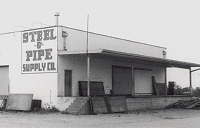
Manhattan Warehouse Closed
After nearly 50 years in operation, the original Steel and Pipe Supply warehouse was closed in October in 2003. With Western Kansas struggling and the Kansas City Warehouse able to move more tons, more efficiently it was time to close the doors in Manhattan. Many of the Manhattan workers took positions In KC or Tulsa and either finished their careers with Steel and Pipe Supply or continue to work today.
Despite closing the warehouse, Steel and Pipe Supply continues to operate our corporate offices in Manhattan and continues Jack’s legacy of community involvement and charity.
Coil Processing Expansion
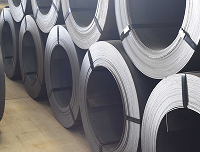
After finding success with the Tulsa Coil Processing facility, Steel and Pipe Supply found an opportunity to expand its coil processing capacity by acquiring the former Huntco facility in Houston. Steel and Pipe Supply had purchased a temper mill and targeted the new Houston facility as the ideal place to locate it.
In 2013, looking to consolidate capacity in Houston, this facility was closed and the property was sold as we consolidated all of our coil processing capabilities inside the Port of Houston.
CJS Industries Acquisition
For years Steel and Pipe Supply had seen more and more customers indicated a desire for value-added processing. We had gradually been adding capabilities with sawing, shot blasting, plasma cutting and even tube lasers, but it was clear our customers needed more. To meet that need quickly while minimizing our learning curve Steel and Pipe Supply acquired CJS Industries in Topeka, KS.
The acquisition immediately transformed Steel and Pipe Supply from a small job shop to a fully capable processor with experience and knowledge it would have taken years to achieve otherwise. Eventually it became clear that these capabilities were more powerful when consolidated with our deep inventories so the Topeka location was closed and the equipment and many employees were transferred to our Kansas City location.
Since this time Steel and Pipe Supply has strategically added processing centers in Tulsa and Houston to support our partners in those regions. To learn more about all of our value-added processing capabilities, click here

Kansas Business Hall of Fame
76 years after coming to Kansas to help his father, Jack Goldstein was honored by the state of Kansas when he was inducted into the Kansas Business Hall of Fame on June 25.2009
Jack’s dedication to Manhattan, Kansas State University, the arts, the military, charity and above all else, his company and employees cannot be understated and this honor was a crowning achievement for a high school graduate who came from nothing to build the legacy that is Steel and Pipe Supply.

In Memoriam
On July 9, 2010 Jack Goldstein, long-time owner of Steel and Pipe Supply passed away at the age of 93. Jack remained active with his beloved company until within a year of his passing.
Jack’s generosity, tenacity, and honesty will be felt for generations to come not only in the Manhattan community where his trusts continue to actively support Kansas State University, the city, and many charities in the community, but also in the lives of so many Steel and Pipe Supply employees and their families impacted by Jack’s genuine compassion for the people that have made Steel and Pipe Supply the company it is.
Title: Houston Expansion
Description: Looking to further our reach into Texas, Steel and Pipe Supply added a full-line service center with value-added processing capabilities in Houston in early 2012.

Matt Crocker
Matt Crocker joined Steel and Pipe Supply as the Vice President of Warehousing and spent the next 8 years learning every aspect of Steel and Pipe Supply and the service center industry. After playing key roles in many innovation projects and leading much of the expansion experienced after his arrival, Matt Crocker was named President of Steel and Pipe Supply in 2013 as Dennis Mullin began to step back and prepare the company for his eventual retirement. Dennis remained CEO and Chairman of the Board.